
Real-Time Visualization for Brain & Spinal Cord Injury Treatment
Intraoperative Neuromonitoring at MedantHospital, Lucknow
What is Intraoperative Neuromonitoring & Neuronavigation?
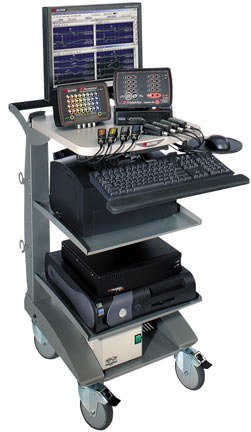
Intraoperative Neuromonitoring (IOM) is a real-time technique that continuously monitors the functional integrity of the nervous system during surgery. It uses electrophysiological methods to detect changes in neural function and alert surgeons to potential nerve damage before it becomes permanent.
Fast Referral Process
We review cases and fast track treatments quickly
Emergency 24x7 Help
We provide round the clock treatment, seven days a week
Major Conditions Treated
We treat all major conditions related to brain, spine and pain management.
Who Needs Neuronavigation & Monitoring?
These techniques are essential for patients with:Brain tumors (especially near critical functional areas)Spinal cord tumors and lesions.Traumatic brain injuries requiring surgical intervention. Spinal cord compression causing neurological deficits. Vascular malformations (AVMs, aneurysms)Tethered spinal cordPatients with cervical myelopathy or stenosisSyrinx (fluid accumulation in spinal cord)Any condition where preserving neurological function is critical
How are These Techniques Performed?
Intraoperative Neuromonitoring:
Pre-operative Setup: Electrodes are placed on the patient’s scalp and limbs under anesthesia.Baseline Recording: Initial neural signals are recorded before surgery begins
Continuous Monitoring: Throughout surgery, signals are continuously recorded from motor pathways (spinal tracts), sensory pathways, and cranial nerves
Real-time Analysis: Neurophysiologists analyze waveforms and alert surgeons to any significant changes (>50% amplitude reduction or increased latency indicates risk)
Intra-operative Adjustments: Surgeons modify technique if warning signs appear
Neuronavigation:
Pre-operative Planning: High-resolution MRI/CT scans are acquired
Image Registration: Patient’s anatomy is registered into the navigation system
3D Reconstruction: Computer creates a 3D map of tumor, blood vessels, and vital structures
Intra-operative Tracking: A tracked pointer/microscope shows the surgeon’s exact position relative to pre-operative imaging
Real-time Guidance: Surgeons follow a planned surgical corridor, minimizing damage to healthy tissue
Are You a Candidate for AVM Treatment?
At Medanta Hospital, Lucknow
Medanta’s advanced neurosurgery unit utilizes state-of-the-art technologies and expertise:
Intraoperative neuromonitoring systems with real-time electrophysiological monitoring
Navigation-guided microscopes for precision during complex procedures
Experienced neurophysiologists who interpret signals in real-time
Multidisciplinary teams combining neurosurgeons, anesthesiologists, and neurophysiologists
This combination ensures optimal outcomes for patients with complex brain and spinal cord pathologies, particularly in challenging cases where functional preservation is paramount.

Why Choose Our Centre for AVM Treatment in Lucknow?
Brain AVM treatment requires a rare combination of skills: endovascular expertise, microsurgical mastery, and radiosurgical precision. We offer all this under one roof.
- Cerebrovascular Sub-Specialisation: Dr. Kamlesh Singh Bhaisora possesses focused expertise in the surgical and endovascular management of complex brain AVMs. His training and experience ensure that these high-risk lesions are treated with the highest standard of care.
- Multimodal Treatment Capability: We do not believe in a single approach for all. We offer the full spectrum:
- Endovascular Embolisation: Minimally invasive glue or coil placement to block feeding arteries.
- Microsurgical Resection: Complete removal of the AVM through precision microsurgery.
- Stereotactic Radiosurgery (CyberKnife VSI): Non-invasive radiation for small, deep, or inoperable AVMs.
- Advanced Imaging & Planning: We use high-resolution cerebral angiography, CTA, MRA, and 3D rotational angiography to map every detail of your AVM, its size, location, feeding arteries, and draining veins before planning treatment.
- Dedicated Neuro ICU: Post-treatment care is critical. Our intensivist-led Neuro ICU provides 24/7 monitoring for complications like cerebral edema, re-bleeding, or vasospasm.
- Proven Track Record: With extensive experience managing complex cerebrovascular cases, our centre is a trusted destination in Lucknow for AVM treatment.

Dr. Kamlesh Singh Bhaisora
MBBS, MS, MCh
- Post-Doctoral Fellowship (Paediatric Neurosurgery) SGPGI Lucknow
- Post-Doctoral Fellowship (Skull Base and Spine Surgery) SGPGI Lucknow
- MS (General Surgery) King George’s Medical University (KGMU) Lucknow
- MBBS King George’s Medical University (KGMU) Lucknow.
Our Advanced AVM Treatment Modalities
We tailor the treatment to your specific AVM using a multidisciplinary approach.
Endovascular Embolisation (Minimally Invasive)
- The Procedure: A microcatheter is threaded from an artery in the groin up to the brain. A liquid embolic agent (glue or Onyx) is injected to block the abnormal vessels feeding the AVM.
- Purpose: Can cure small AVMs alone, reduce the size of large AVMs before surgery or radiosurgery, or target dangerous components like aneurysms.
- Recovery: Typically 1-2 days in hospital; minimally invasive with no cranial incision.
Microsurgical Resection (Open Surgery)
- The Procedure: Under an operating microscope, Dr. Bhaisora performs a craniotomy to access the brain, meticulously dissects around the AVM, and removes it completely while preserving normal blood vessels and brain tissue.
- When Used: For AVMs that are small to moderate in size, located in non-eloquent (non-critical) brain areas, or after embolisation has reduced blood flow.
- Cure Rate: Approaches 95-100% for appropriately selected AVMs when completely resected.
Stereotactic Radiosurgery (CyberKnife VSI)
- The Procedure: Highly focused radiation beams are precisely targeted at the AVM. Over 1-3 years, the blood vessels gradually thicken and close off.
- When Used: For small AVMs (<3 cm), located deep or in eloquent brain areas where surgery carries high risk.
- Success Rate: 70-85% obliteration rate at 2-3 years, with low risk of complications.
Combined (Staged) Approach
- Embolisation + Surgery: To reduce blood flow before resection, making surgery safer.
- Embolisation + Radiosurgery: To shrink the AVM size so radiosurgery becomes effective.
- Radiosurgery after Partial Embolisation: To treat residual nidus.
Hear from Our Patients

Dr. Kamlesh Bhaisora is considered the Best Neurosurgeon in Lucknow. Read our 5 star reviews on Google
Vishvajit Singh
Shiv_R
Priyanshu
Meet Our Specialist for AVM Treatment
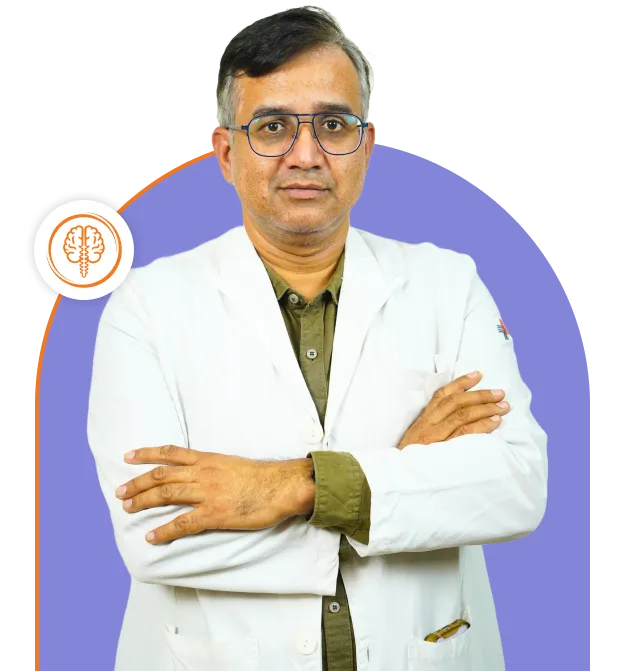
Dr. Kamlesh Singh Bhaisora
Director & Head – Neurosurgery
Dr. Kamlesh Singh Bhaisora, Director & Head of Neurosurgery, is a cerebrovascular specialist uniquely skilled in both endovascular embolisation and microsurgical resection, allowing unbiased, optimal treatment for brain AVMs. He has significant experience managing high-grade, complex AVMs using advanced navigation and neuro-monitoring. His mastery of AVM angioarchitecture enables meticulous pre-treatment planning, and he provides balanced counselling for a unruptured AVMs. Trained at SGPGIMS, Dr. Bhaisora offers the expertise needed for complete cure and long-term safety, making him the ideal AVM specialist in Lucknow.
Don't Live with the Fear of the Unknown. Consult Our AVM Specialist.
If you have been diagnosed with a brain AVM, whether ruptured or unruptured, expert evaluation is essential. Let our team provide the clarity and advanced treatment you deserve.
Schedule a consultation with Dr. Kamlesh Bhaisora’s cerebrovascular team today. Call us at 0731 852 4184 Or visit us at Medanta, B Wing, Floor 2, Shaheed Path, Golf City, Lucknow and Check Appointment Availability now.
Frequently Asked Questions (FAQs)
Q. Best treatment for a brain AVM?
Q. Can a brain AVM be cured completely?
Q. Success rate at your centre?
Q. Is treatment risky? Can it cause a stroke?
Q. Treatment or just observation?
Book Your Arteriovenous Malformation (AVM) Treatment Consultation in Lucknow Today!
An arteriovenous malformation (AVM) is a serious condition that can increase the risk of brain bleeding, seizures, headaches, and neurological complications if left untreated. Early evaluation by an experienced neurosurgeon is essential for accurate diagnosis and timely treatment. Schedule your consultation with Neurosurgery By Dr. Kamlesh Bhaisora by calling 0731 852 4184, or visit Medanta Hospital, B Wing, Floor 2, Shaheed Path, Golf City, Lucknow. Our team provides advanced arteriovenous malformation treatment in Lucknow using microsurgical techniques, endovascular procedures, and personalized treatment planning, with 24×7 emergency neurosurgical care available.
